


QUICK ANSWER
Blackout curtains block 99–100% of incoming light, room darkening curtains block 95–99%, and light filtering curtains block 30–60% while diffusing daylight. Choose blackout curtains for total darkness (bedrooms, home theaters), room darkening curtains for significant dimming with a soft glow (most bedrooms and TV rooms), and light filtering curtains for natural daylight with privacy (kitchens, living rooms, offices).
Light-filtering curtains soften and diffuse daylight. Room-darkening curtains block most light without creating total darkness. Blackout curtains can block up to 99% of sunlight through the fabric when properly fitted. The right choice for you comes down to one decision — how much light you want to block and what you need each room to do.
The three categories sit on a spectrum from “barely dim” to “pitch dark.” Pick the wrong one for your needs, and you’ll either fight sunlight in the morning or live in a cave by midafternoon.
Since 2007, Allure Window Treatments has designed and installed custom shades, blinds, drapery and motorized window treatments for residential and commercial clients throughout Philadelphia, the Main Line and South Jersey. We’ll help you find the right solution for every area in your home.
In This Guide
- › How light blocking is measured
- › Light filtering curtains explained
- › Room darkening curtains explained
- › Blackout curtains explained
- › Side-by-side comparison table
- › How to choose the right type for each room
- › How to layer curtains for maximum control
- › Common installation mistakes that ruin light blocking
- › Frequently asked questions
How Light Blocking is Actually Measured
Manufacturers describe curtains by what percentage of light they block. There’s no industry-mandated standard, but the working definitions used by Hunter Douglas and most reputable dealers are consistent:
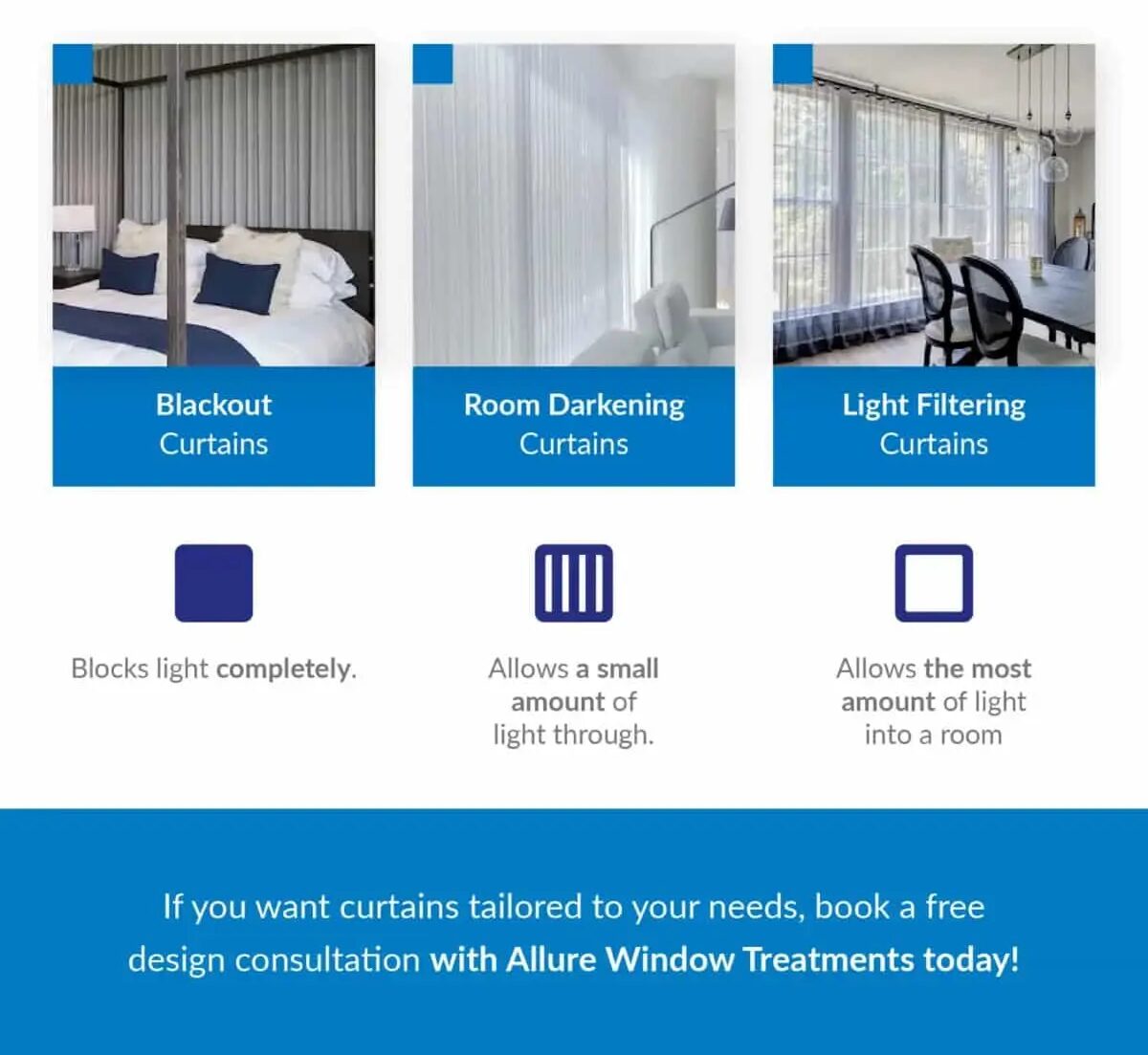
- Light filtering: blocks roughly 30–60% of light. Daylight comes through, softened and diffused.
- Room darkening: blocks 95–99% of light. The room becomes noticeably dim, with a faint glow around the edges.
- Blackout: blocks 99–100% of light through the fabric itself. With proper installation, the room can feel close to pitch black.
The percentage refers to the fabric only. Light always finds a way in through gaps at the top, sides, and bottom of the curtain — which is why installation often matters more than fabric choice.
What Are Light Filtering Curtains?
Light-filtering curtains soften natural light without blocking it completely, using semi-transparent fabrics. However, they don’t provide nighttime privacy or help you sleep past sunrise. Key features of light-filtering curtains include:
- Light control: These curtains diffuse sunlight to reduce glare while maintaining brightness in your space.
- Privacy: They block clear views from outside while allowing you to see shadows and outlines.
- Best spaces: They’re best for living rooms, dining areas and home offices where you want natural light without harshness.
- Limitations: Light-filtering curtains are not ideal for bedrooms or media rooms where you need darkness for sleep or screen viewing.
Allure Window Treatments offers light filtering options in custom fabrics from leading brands like Fabricut, Kravet and Carole Duralee. Our design team can help you select colors and textures that complement your interior while providing the right level of light control.
Not sure which type of curtains your room needs?
Our designers bring fabric samples to your home so you can see exactly how each option looks against your light — morning, afternoon, and night.
The Benefits of Room-Darkening Curtains
Room-darkening curtains block most light, but not all of it. These curtains use medium-weight fabric paired with a soft liner, creating a significantly dimmer environment.
Room-darkening curtains offer several advantages:
- Light blocking: They block most sunlight while allowing a soft glow around the edges of the curtain.
- Versatility: They’re perfect for bedrooms, TV rooms, dens, nurseries and spaces needing significant light control without total darkness — but won’t create true home theater conditions.
- Energy efficiency: Thicker fabrics provide better insulation, helping regulate indoor temperatures and reduce energy costs.
- Sound dampening: If noise control is a priority, our team can recommend options like honeycomb shades, Roman shades or drapes.
See some of our custom room-darkening curtains, ideal for those who love a midday nap.
Choose Blackout Curtains When Total Darkness Is the Goal
Our blackout curtains use densely woven fabrics or special backing materials that prevent light from passing through. When properly installed with minimal gaps at the edges, blackout curtains can transform a bright room into a dark sanctuary at any time of day.
Blackout curtains work best in master bedrooms of shift workers who sleep during daylight hours, especially east-facing rooms. They’re popular in nurseries where infants need consistent darkness for naps, master suites in hotels, and bedrooms facing streetlights or bright outdoor areas. They’re also valuable in home theaters where even small amounts of light can interfere with screen visibility.
Beyond light blocking, our blackout shades and curtains provide maximum privacy and thermal insulation. The heavy fabrics create an effective barrier against outside temperatures, helping your HVAC system work more efficiently. In summer, they keep the heat out. In winter, they help retain warmth inside your home.
The Reality of True Blackout
No curtain setup can achieve total darkness. Light invariably seeps in from:
- The gap at the top, between the curtain and the wall.
- The edges where the fabric meets the window frame.
- The space beneath the curtain’s hem.
Achieving a genuine blackout requires one of these solutions:
- Wrap-around installation: Curtains are mounted outside the window frame, extending well beyond the window frame and reaching the floor.
- Layered approach: Combine blackout cellular shades fitted inside the window frame with blackout drapery on the exterior.
- Specialized seals: Utilize side channels or magnetic edge seals. While less common for standard drapery, these are a feature of Hunter Douglas blackout shades.
For a genuinely dark room, consult a designer prior to ordering. The installation method is often more critical than the product itself.
Need true blackout for a bedroom or theater?
Most blackout failures are install problems, not fabric problems. Our team measures, fabricates, and installs every project in-house — no subcontractors, no guesswork on light gaps.
Schedule a free consultation in Philadelphia or the Main Line →
Comparing Your Options
The main difference between these three curtain types is light penetration. Light-filtering curtains let soft, diffused light into your space while reducing glare and maintaining daytime privacy. Room-darkening curtains block most light, creating a dimmer environment with some ambient glow around the edges. Blackout curtains block nearly all light, creating darkness comparable to nighttime conditions at any hour.
Your choice depends on the room’s purpose and your specific needs. Consider how you use the space, what time of day you need light control, and whether you have external light sources, such as streetlights or neighboring buildings, that affect your comfort. Each curtain type offers different levels of privacy, with blackout options providing the most complete visual barrier.
Here’s how the three types of curtains compare to one another:
| Feature | Light Filtering | Room Darkening | Blackout |
|---|---|---|---|
| Light blocked | ~30–60% | ~95–99% | 99–100% |
| Best for | Kitchens, living rooms, home offices | Bedrooms, nurseries, TV rooms | Master bedrooms, home theaters, shift workers |
| Privacy (daytime) | Partial — silhouettes visible | Strong | Complete |
| Privacy (night, lights on) | Limited — interior visible | Strong | Complete |
| Energy efficiency | Good UV protection | Better insulation | Best insulation |
| Fabric weight | Lightweight, sheer | Medium-weight with liner | Heavy, dense liner |
| Noise reduction | Minimal | Moderate | Significant |
Allure Window Treatments crafts custom curtains to order, either in state-of-the-art facilities or handmade in our in-house drapery workroom. We can create layered designs that combine sheer panels with heavier fabrics, giving you flexible light control throughout the day. Our team will help you select the right hardware, fabric and installation method to make sure your curtains perform exactly as you need them to.
A Guide to Layered Curtains
Let’s face it — one curtain just won’t cut it when you want real control over the light coming into your home. That’s why the best setup we put into homes is actually two separate layers. This flexibility means your single window can do four different things with light:
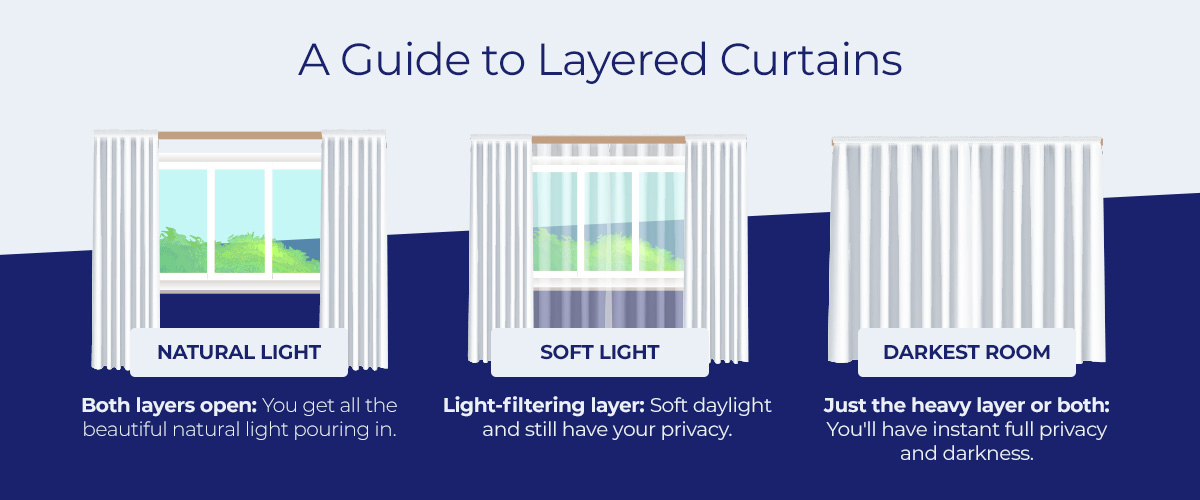
- Both layers open: You get all the beautiful natural light pouring in.
- Just the light-filtering layer: You get that lovely, soft daylight and still have your privacy during the day.
- Just the heavy layer or both: Whenever you need it, you’ll have instant full privacy and darkness.
- Both closed at night: This gives you the darkest room possible and even helps with insulation.
Here are some layered combinations that work well:
- Sheer with blackout cellular shades: This combination is very popular for bedrooms. You install blackout honeycomb shades right inside the window frame, then layer beautiful, flowing sheer drapes from floor to ceiling in front. During the day, it looks soft and elegant. At night, those cellular shades come down and effectively block nearly all the light.
- Light-filtering Roman shades and room-darkening drapery: Consider the Roman shades your daytime privacy solution, allowing light to filter in beautifully. For the evening, you have side drapery panels that you can simply pull closed for complete darkness. This sophisticated look is common in places like formal living rooms, primary bedrooms and dining rooms, especially in those gorgeous Main Line homes.
- Solar shades with blackout drapery: This setup is quite effective. During the day, the solar shades reduce harsh UV rays and glare without darkening the room. When night arrives, your blackout drapes take over. It’s an ideal option for west-facing rooms where you have concerns about sun damage — and for east-facing master suites where darkness is preferred over morning light.
Beyond the Basics
When it comes to how well your curtains manage light, a few things really make a difference:
- Fabric weight and color: Darker, heavier fabrics naturally block more light than lighter colors and thinner materials. Performance varies within the same curtain category based on these factors.
- Installation method: Inside-mounted curtains leave gaps for light around edges. Mounting curtains above and wider than the window frame provides better coverage and enhances the blocking effect of blackout drapery and room darkening treatments.
- Layered treatments: Combining curtain types with other window treatments maximizes flexibility. If you combine room-darkening or blackout shades with decorative panels, you get the best of both worlds.
How to Choose the Right Curtains for Each Room in Your House
The single best question to ask is: “What time of day will I be in this room, and what do I want the light to do?”
| Room | Light Filtering | Room Darkening | Blackout |
|---|---|---|---|
| Bedrooms Default choice for most bedrooms |
✓ | If east/SE facing, light sleeper, or affected by street lights | |
| Nurseries For consistent infant sleep |
✓ | ||
| Living Rooms Balance daylight & privacy |
✓ | If your TV is opposite a window | |
| Kitchens & Dining Rooms Daytime-focused spaces |
✓ | ||
| Home Offices Reduce screen glare |
✓ | If glare is a problem | |
| Home Theaters & Media Rooms Complete darkness required |
✓ | ||
| Bathrooms Depends on glass type & neighbors |
✓ | ✓ | ✓ |
Frequently Asked Questions
We get a lot of great questions about how to make the most of your window treatments. So, we’ve put together our answers to some of the most common ones.
Which Curtain Type Is Best for Bedrooms?
Most bedrooms benefit from blackout curtains rather than room-darkening curtains, depending on your sleep preferences. If you’re a light sleeper, work night shifts or live in an area with bright streetlights, blackout curtains create the darkness needed for quality rest. Room-darkening curtains work well if you prefer some soft light or want to wake naturally with the sunrise. Consider your sleep schedule and light sensitivity when making this choice.
Do These Curtains Help With Noise Reduction?
Curtains provide minimal noise reduction on their own. For effective sound dampening, consider honeycomb shades, Roman shades or drapes specifically designed for acoustic control. The cellular structure of honeycomb shades traps air and absorbs sound waves, while heavy drapery fabrics add mass that helps block external noise. We can recommend treatments that address light control and noise concerns in your space.
Can I Combine Light-Filtering and Room-Darkening Curtains in the Same Room?
Layering different curtains is a great way to control light all day. Start with light-filtering sheers, then add room-darkening or blackout curtains on a separate rod. That way, you can enjoy filtered natural light during the day, and then easily switch to full privacy and darkness whenever you need it — perfect for rooms that serve multiple purposes.
Can I Get Curtains That Switch Between Light Filtering and Blackout?
While a single curtain panel won’t provide this versatility, layered window treatments certainly do. A popular and effective solution involves pairing blackout cellular shades with light-filtering drapery installed behind them. This setup enables independent operation of each component, giving you the flexibility to choose between bright daylight, softly diffused light or complete darkness, all from one window.
Find the Right Curtains for Your Home
Selecting between room-darkening, light-filtering, and blackout curtains affects your comfort, privacy and energy efficiency. Allure Window Treatments will bring fabric samples to your home and show you exactly how each option will perform with your windows and light. Schedule your free design consultation to start designing. We’ll help you create the perfect environment in every room.


Shani is the Partner and Marketing Director of Allure Window Treatments, bringing over a decade of experience in the window treatments industry.
Sorry, the comment form is closed at this time.